5 Common Causes of Water Damage in Spartanburg Homes
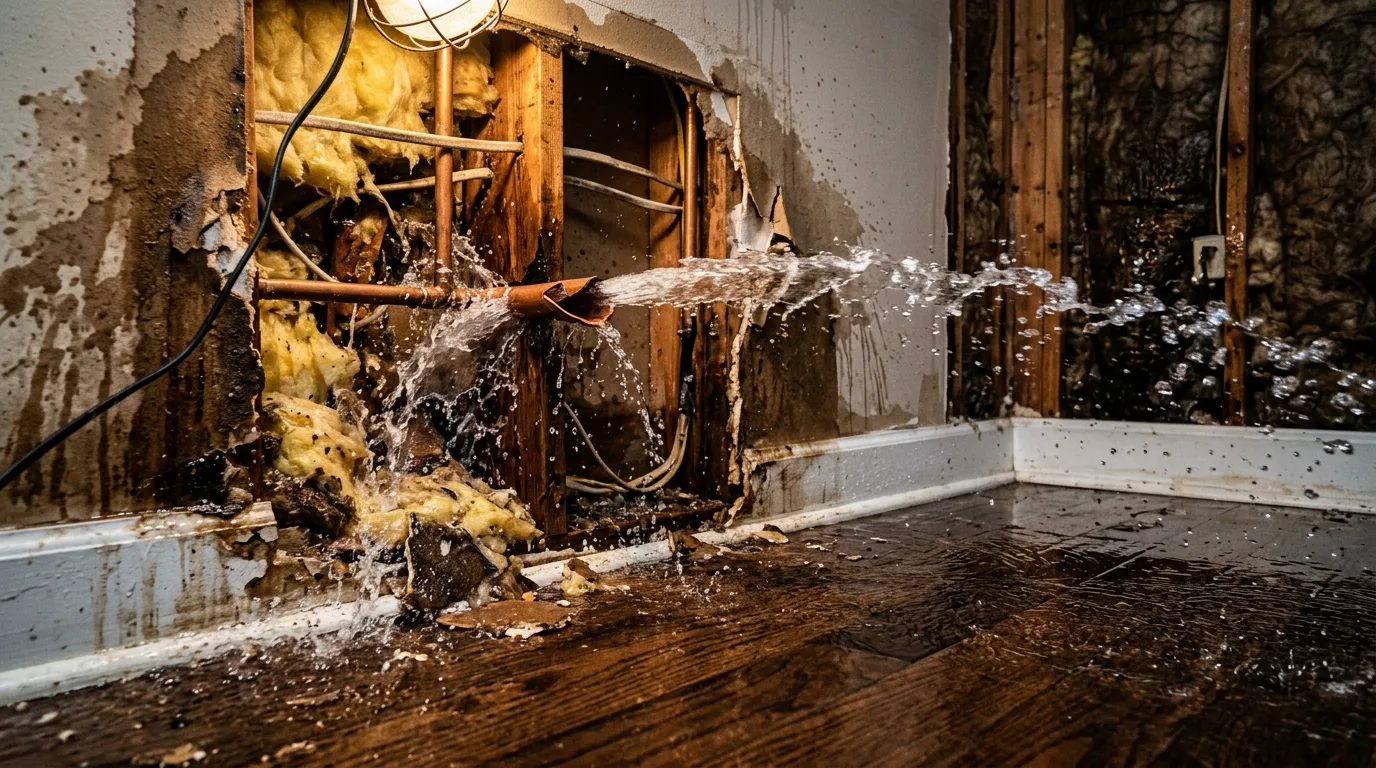
A homeowner in Spartanburg’s Fernwood neighborhood opened their crawl space hatch last spring and found a foot of standing water — the result of a slow foundation seep that had been developing undetected through Spartanburg’s wet season. What causes water damage in Spartanburg homes isn’t always dramatic. Some of the costliest losses develop gradually, driven by the specific combination of climate, soil, and housing stock that makes Spartanburg uniquely vulnerable to certain water damage sources.
In this post, we cover the five most common causes of water damage in Spartanburg SC, why each is particularly prevalent here compared to other regions, and what homeowners can do to reduce their risk before a loss occurs.
Water Damage in Your Spartanburg Home?
Call (888) 376-0955 for immediate assessment and 60-minute emergency response across Spartanburg County.
Why Spartanburg’s Conditions Drive Specific Water Damage Patterns
Spartanburg County’s water damage risk profile is shaped by three factors that interact to produce a distinct pattern of losses: a humid subtropical climate that delivers nearly 50 inches of annual rainfall and summer humidity above 70%, Piedmont red clay soils that drain slowly and hold moisture against foundations, and a housing stock with a high proportion of crawl space homes — many of them built before modern moisture management standards were codified.
Understanding these factors helps homeowners in the Converse Heights historic district, throughout Spartanburg County, and in surrounding communities like Greer and Duncan identify the specific risks most relevant to their home and take targeted prevention steps.
Cause 1: Burst Pipes from Winter Freeze-Thaw Cycles
Spartanburg’s position in Upstate South Carolina means it experiences the freeze-thaw cycles that coastal South Carolina largely avoids. In a typical Spartanburg winter, temperatures cycle above and below freezing multiple times — sometimes within a 24-hour period. Pipes in uninsulated crawl spaces and exterior walls repeatedly freeze, expand, contract, and sometimes split.
The most vulnerable pipes are in crawl spaces with inadequate vapor barriers and no insulation, in exterior wall cavities facing north or west, and in garage walls where doors are left open in freezing temperatures. The pipe itself often doesn’t fail at the moment of freezing — it fails when temperatures rise and pressure builds in the thawed section between two freeze points.
Burst pipes are Spartanburg’s most common sudden water damage event from November through February. A typical failure can release thousands of gallons before the main supply is shut off, saturating subfloor, walls, and insulation in a matter of hours. See our guide on preventing frozen pipes in Spartanburg during winter for specific steps homeowners in this climate can take.
Cause 2: Spring Storm Flash Flooding
Spartanburg County recorded 68 flood events and 41 flash flood events between 1993 and 2020 — a rate that reflects the intense convective thunderstorm activity the region experiences from February through May. The highest single-day rainfall on record for Spartanburg was 9.32 inches in August 1995, but spring storm cells routinely produce 2–4 inches in under an hour, which overwhelms residential drainage systems and generates rapid surface flooding.
The combination of heavy rainfall and saturated Piedmont red clay soil is what makes spring flooding in Spartanburg particularly damaging. By late spring, after months of precipitation, the clay soil around most homes is already near or at field capacity — it cannot absorb additional water. Subsequent rain events produce direct surface runoff that flows toward the lowest available point, which is frequently a foundation wall, window well, or crawl space vent. Properties in low-lying areas near creek corridors and the Mary Black Foundation Rail Trail see this type of intrusion most frequently.
For information on flood insurance and FEMA flood zone coverage for Spartanburg properties, see our guide on does homeowners insurance cover water damage in South Carolina.
Cause 3: HVAC Condensate Line Failures
Spartanburg’s summer — with humidity above 70% and temperatures regularly in the 90s — causes residential HVAC systems to produce enormous volumes of condensate. A properly functioning condensate drain line carries this water away harmlessly. A blocked or disconnected line releases it directly into the air handler cabinet, attic, or ceiling cavity.
Condensate blockages peak from June through September, when cooling systems run continuously and algae growth in condensate lines accelerates. A condensate pan overflow can produce a slow, hidden leak for days before it becomes visible — by which point ceiling and wall damage may be substantial. HVAC condensate failures are Spartanburg’s most common cause of ceiling water damage in modern homes with attic-mounted air handlers, and they’re frequently misdiagnosed as roof leaks until the system is inspected.
Annual condensate line flushing (August or September, before peak usage) is the most effective prevention. This is one of the maintenance items covered in our seasonal home maintenance checklist for Spartanburg homeowners.
Cause 4: Crawl Space Moisture from Red Clay Soil
Chronic crawl space moisture is Spartanburg’s most widespread water damage problem — and the one most often dismissed as “normal” until structural damage is discovered. The region’s Piedmont red clay soil generates persistent hydrostatic pressure against crawl space walls and floor joists. Water doesn’t need to visibly enter through a discrete failure point — it migrates through the soil and concrete as vapor, elevating crawl space humidity to levels that sustain mold growth on floor joists and subfloor continuously.
The majority of pre-1990 crawl space homes in Spartanburg were built with vented crawl spaces and minimal vapor barriers — construction standards that were appropriate for drier regions but actively worsen moisture problems in Spartanburg’s climate. The remedy is full encapsulation: a heavy-duty vapor barrier sealed to the foundation walls, a crawl space dehumidifier, and drainage to handle any liquid water. See our full guide on crawl space moisture in Spartanburg’s red clay for a detailed explanation.
Crawl Space or Water Damage Assessment in Spartanburg
Call (888) 376-0955 or schedule a free inspection. We serve Spartanburg, Greer, Duncan, and all of Spartanburg County.
Cause 5: Aging Plumbing in Historic Neighborhoods
Converse Heights, Hampton Heights, and other older Spartanburg neighborhoods contain homes with original plumbing systems that are approaching or exceeding their design lifespan. Original galvanized steel pipes from the 1940s–1960s corrode from the inside out — the first sign of failure is often discolored water, followed by a pinhole leak, followed by a catastrophic section failure when the pipe wall can no longer hold pressure. Cast iron drain pipes from the same era crack and leak at joints, allowing sewer gas and drain water to escape into wall cavities and crawl spaces.
Historic district homes face a compounded risk: their construction methods — plaster walls, old-growth pine subfloor, brick foundations — are more water-sensitive than modern materials but also harder and more expensive to dry and repair when a loss occurs. A pipe failure in a Hampton Heights home can affect plaster walls that take 3–4 times longer to dry than modern drywall, extending the restoration project and increasing cost.
For homeowners in Spartanburg’s historic neighborhoods, annual plumbing inspection by a licensed SC plumber is the most effective way to catch developing failures before they produce losses. Our guide on water damage in historic homes in Converse Heights and Hampton Heights covers the specific restoration challenges these properties present.
Frequently Asked Questions
What is the most common cause of water damage in Spartanburg homes?
Burst pipes during winter freeze-thaw cycles and spring storm flooding are tied as Spartanburg’s most frequent sudden water damage sources. Chronic crawl space moisture from red clay soil hydrostatic pressure is the most widespread ongoing problem, affecting a significant portion of Spartanburg County’s pre-1990 housing stock. See our water damage restoration service page for more on what each type of loss involves.
How does Spartanburg’s humidity affect water damage?
Spartanburg’s summer humidity above 70% creates conditions where wet materials do not air-dry naturally — professional drying equipment is required to bring structural moisture back to safe baseline levels. The high ambient humidity also means mold can begin growing on wet materials within 24–48 hours of a water event, compressing the window for effective intervention. See our guide on mold growth after water damage for more.
Which Spartanburg neighborhoods are most vulnerable to water damage?
Converse Heights and Hampton Heights face above-average risk from aging plumbing and the older construction methods common in historic districts. Properties throughout Spartanburg County in crawl space homes built before 1990 face elevated crawl space moisture risk from the region’s red clay soil. Low-lying areas near creek corridors see higher flash flood exposure during spring storm season.
Protect Your Spartanburg Home from Water Damage
Spartanburg Water Damage Restoration provides free assessments and 60-minute emergency response. Call (888) 376-0955.
Related resources: