How to Prevent Frozen Pipes in Spartanburg During Winter
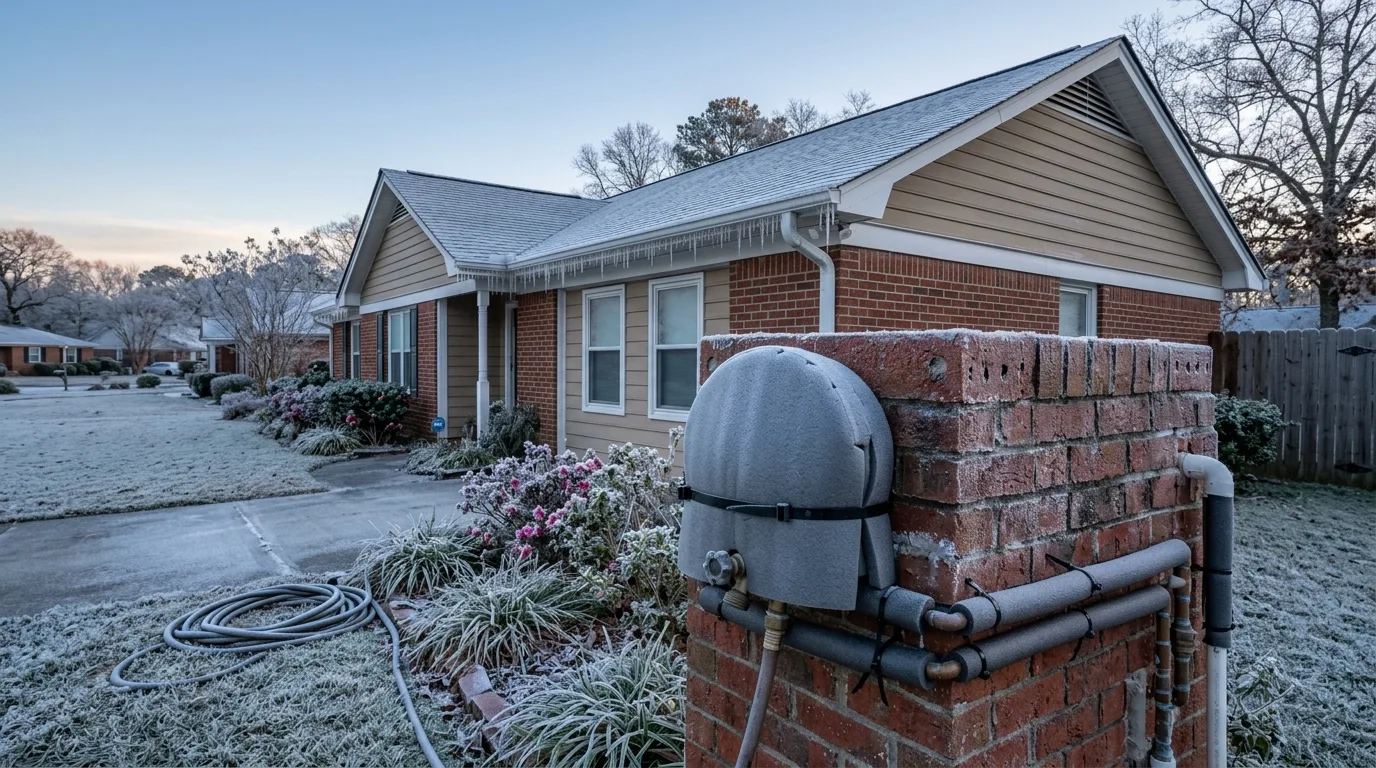
Spartanburg homeowners who moved here from coastal South Carolina sometimes underestimate frozen pipe risk — after all, South Carolina isn’t Minnesota. But frozen pipes in Spartanburg are a real and recurring problem that generates some of the city’s most expensive water damage claims every winter. Spartanburg’s position in Upstate SC means it regularly experiences the freeze-thaw cycles that coastal regions largely avoid, and the housing stock — dominated by crawl space homes with pipes in uninsulated spaces — is particularly vulnerable to overnight temperature drops.
In this post, we cover why Spartanburg’s specific climate creates outsized freeze risk, which pipes and homes are most vulnerable, and what steps homeowners throughout Spartanburg County can take to prevent a winter pipe failure.
Pipe Burst Emergency in Spartanburg?
Call (888) 376-0955 for 24/7 emergency water removal and 60-minute response across Spartanburg County.
Why Spartanburg’s Winter Creates Freeze-Thaw Pipe Risk
Pipes don’t fail from a single hard freeze — they fail from the cyclical stress of repeated freezing and partial thawing. Spartanburg’s winter temperature pattern is exactly the profile that produces this kind of fatigue: temperatures regularly oscillate above and below 32°F, sometimes multiple times within a 24–48 hour period. A pipe that survives a single cold night may fail after the third or fourth freeze-thaw cycle of the season, when the pipe wall has been repeatedly stressed and expanded.
Spartanburg’s Upstate SC location produces an average of several significant freeze events per winter — enough to matter, and enough unpredictability that homeowners who escaped damage in prior years sometimes assume they don’t have a real risk. The winter storm damage cost for Spartanburg County since record-keeping began is $70.981 million — a figure that reflects decades of freeze events affecting a housing stock that is fundamentally not designed for sustained cold in the way that northern construction is.
The typical Spartanburg crawl space home — with plumbing running through an uninsulated, vented crawl space — is far more vulnerable to freeze events than a slab-on-grade home or a home with conditioned basement space. The crawl space temperature drops rapidly when outdoor temperatures fall, and the pipes inside have minimal thermal buffer from the cold.
Which Pipes Are Most Vulnerable to Freezing in Spartanburg
Not all pipes face equal risk. Understanding which are most vulnerable helps homeowners prioritize protection:
Crawl space pipes: The highest-risk location in Spartanburg. An uninsulated vented crawl space reaches temperatures near or below outdoor air temperature within hours of a temperature drop. Water supply pipes running through the crawl space — especially horizontal runs with little circulation — are frequently the first to freeze.
Exterior wall pipe runs: Pipes routed through exterior walls, particularly north-facing and west-facing walls without adequate insulation, are vulnerable to sustained cold. This is more common in older homes throughout Converse Heights and Hampton Heights where plumbing runs were added without consistent insulation practices.
Garage wall pipes: Pipes in walls shared with an unheated garage lose thermal protection when garage doors are left open during cold weather.
Irrigation and outdoor hose bib lines: Any outdoor plumbing that retains water after the season ends is vulnerable.
Pipes near exterior openings: Foundation vents, dryer vent penetrations, and other openings in the crawl space allow cold air infiltration that drops local temperatures significantly around nearby pipes.
Prevention Steps Spartanburg Homeowners Should Take Before Winter
Insulate crawl space pipes: Foam pipe insulation is inexpensive and provides meaningful protection for pipes in crawl spaces. For pipes most exposed to cold air from vents or drafts, use heated tape beneath the insulation for the highest-risk sections.
Seal crawl space vents during freeze events: During a forecast freeze, sealing or covering foundation vents with foam vent covers significantly slows the temperature drop in the crawl space. Some homeowners seal vents seasonally (winter) in climates like Spartanburg’s where the primary moisture risk is already managed by encapsulation.
Keep cabinet doors open: Under-sink cabinets on exterior walls should have doors left open during freezing nights to allow heated air to reach the pipes. This simple step prevents many kitchen and bathroom pipe failures.
Set the thermostat no lower than 55°F when away: For unoccupied homes during winter, 55°F minimum maintains enough heat to prevent pipe freezing in interior walls. Going significantly lower in Spartanburg winter creates real freeze risk, particularly in the crawl space.
Know where your main water shutoff is: Every household member should know how to shut off the main water supply — typically at the meter or at a main shutoff near the water heater. The ability to shut the supply off within minutes of a pipe failure is the difference between a small water damage claim and a major one.
Disconnect and drain outdoor hoses: Hoses left connected hold water in the hose bib, which can freeze and split the bib or the short pipe section behind it.
Dealing with Water Damage from a Pipe Burst in Spartanburg?
Emergency extraction and structural drying — 60-minute response anywhere in Spartanburg County. Call (888) 376-0955.
What to Do If Your Pipes Freeze
If you turn on a faucet and get little or no water on a cold morning, a pipe may be frozen. Don’t wait to see if it thaws on its own — a frozen pipe can burst when it partially thaws, releasing the pressure that built up in the frozen section.
Do not use open flame to thaw pipes — this is a fire hazard and can damage pipe materials. Safe thawing methods include a hair dryer on low heat, a space heater positioned near the pipe (not touching it), or warm water soaked towels wrapped around the pipe.
Open the faucet before thawing — allowing the water to flow when it melts relieves pressure and helps you track when the pipe has cleared.
Inspect the length of the pipe — look for bulging, cracking, or frost along the pipe length before applying heat. If the pipe appears already cracked, shut off the main water supply before the pipe thaws.
Call immediately if you find a burst pipe — pipe bursts require emergency water removal and structural drying. Every hour of delay increases the total damage. See our guide on emergency water removal in Spartanburg.
Frequently Asked Questions
Do frozen pipes happen in Spartanburg SC?
Yes — Spartanburg’s Upstate SC location produces winter freeze-thaw cycles that regularly affect the region’s crawl space homes. While less severe than northern climates, Spartanburg’s freeze events are sufficient to cause pipe failures, particularly in homes with uninsulated crawl spaces and pipes along exterior walls. Freeze-related pipe bursts are among Spartanburg’s most common winter water damage claims.
What temperature do pipes freeze in Spartanburg homes?
Pipes in exposed locations like crawl spaces and exterior walls begin to freeze when those local temperatures drop to 32°F or below. Because crawl spaces cool faster than outdoor air in cold, still conditions, a forecast low of 28°F outdoors can mean crawl space temperatures near 20°F — well into the freeze zone for vulnerable pipes.
How much does it cost to fix water damage from a burst pipe in Spartanburg?
Water damage restoration in Spartanburg from a burst pipe averages $2,188–$2,249, with projects ranging from $2,157 to $2,279 depending on scope and materials affected. A burst pipe caught within the first hour is significantly less expensive to remediate than one that ran for hours before being discovered. See our full cost guide at water damage restoration cost in Spartanburg.
Spartanburg Pipe Burst and Water Damage Response — 24/7
IICRC-certified water extraction and structural drying. Spartanburg Water Damage Restoration responds in 60 minutes. Call (888) 376-0955.
Related resources: