Does Homeowners Insurance Cover Water Damage in South Carolina?
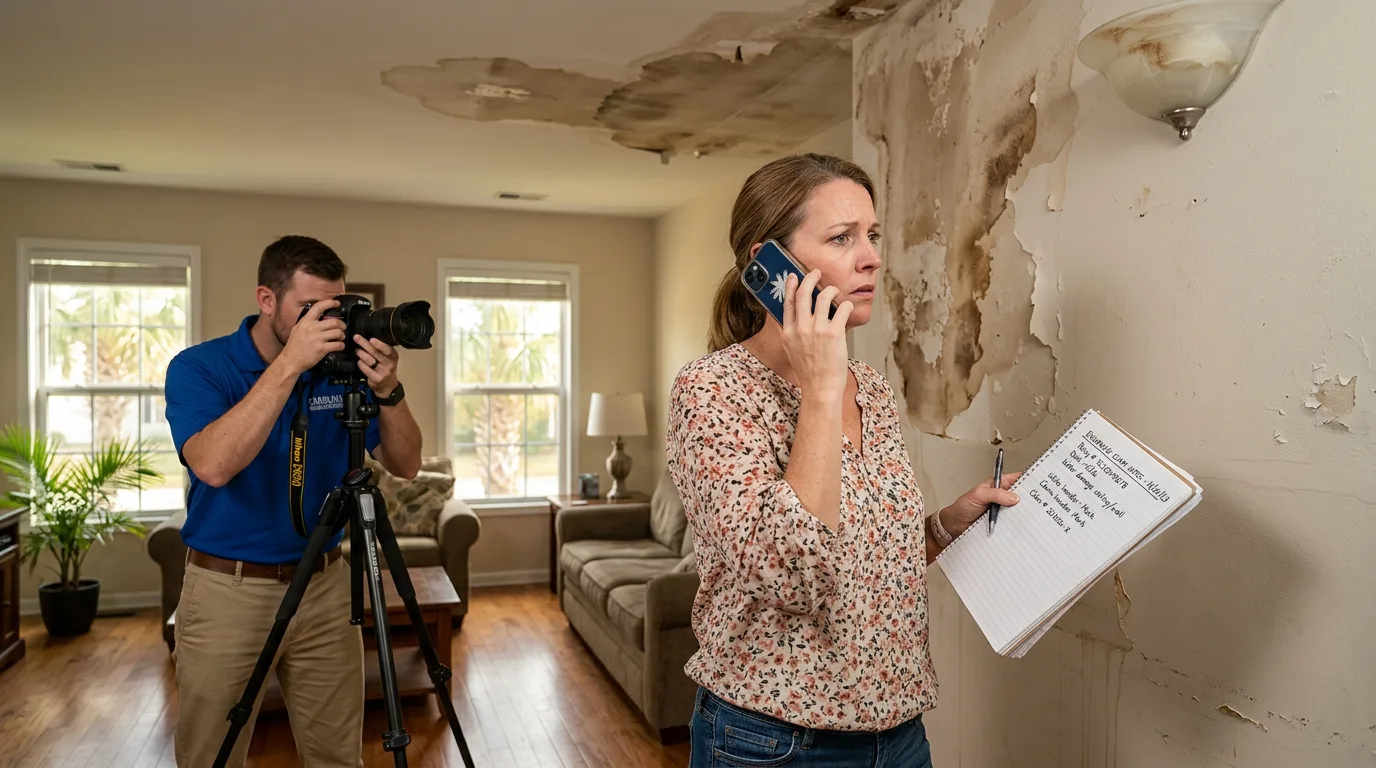
A burst pipe soaks three rooms of a home in the Hampton Heights historic district on a December night. The homeowner calls their insurance company and hears words that feel like a gut punch: “That may not be covered.” Whether homeowners insurance covers water damage in South Carolina depends entirely on the cause of the loss — and the distinctions that determine coverage are ones most homeowners don’t fully understand until they’re filing a claim.
In this post, we cover what standard South Carolina homeowners insurance policies cover and exclude, what endorsements Spartanburg homeowners should consider, and how to document a water damage loss to maximize your claim.
Water Damage Claim Support in Spartanburg
We work directly with your insurer — documentation, scope-of-loss reports, and adjuster coordination. Call (888) 376-0955.
What Standard Homeowners Insurance Covers
Standard homeowners insurance policies in South Carolina cover sudden and accidental water damage. The critical words are “sudden” and “accidental” — the loss must be unexpected and must happen quickly, not over an extended period.
Typically covered under standard policies:
- Burst or leaking pipes from freeze-thaw events or sudden failures — one of the most common claims in Spartanburg County during winter cold snaps
- Appliance failures — water heater leaks, washing machine overflow, dishwasher failures where the event is sudden
- Roof breaches — storm damage that allows water to enter through the roof during a rain event
- HVAC condensate overflow — when a condensate line failure causes water damage to ceilings or walls, most policies cover the resulting damage (though not the HVAC repair itself)
The key standard: If a reasonable homeowner could not have known the event was occurring and taken steps to prevent it, the loss is more likely to be covered. If the event was developing slowly — a small drip that widened over months — coverage becomes uncertain.
What Standard Homeowners Insurance Excludes
Gradual leaks: This is the most frequently triggered exclusion in South Carolina water damage claims. Policies typically exclude damage from a continuous and repeated seepage or leakage of water that you knew about or reasonably should have known about. A slow drip under a sink that eventually saturates the cabinet and subfloor may be excluded if the insurer can show the leak had been developing for weeks or months.
External flood damage: Rising water from outside the home — stormwater, storm surge, municipal storm drain backup — is excluded from standard homeowners policies. Spartanburg County has recorded 68 flood events since 1993, but standard coverage would not apply to those losses. Flood coverage requires a separate NFIP or private flood insurance policy.
Sewage backup: Sewage backup from a public sewer or private septic system is typically excluded from standard policies unless a specific sewage backup endorsement is in place. This is an important gap for Spartanburg homeowners in neighborhoods with aging sewer infrastructure.
Mold: Standard policies vary widely on mold coverage. Some cover mold remediation when it results from a covered water loss; others exclude mold entirely. Read your policy’s mold language carefully, or ask your agent.
What Endorsements Spartanburg Homeowners Should Consider
Given Spartanburg’s flood history and aging infrastructure, three endorsements are worth evaluating:
Sewage backup endorsement: Adds coverage for sewage backup events. This is particularly relevant for homes in older Spartanburg County neighborhoods where the sewer lateral is original clay pipe — a common failure point during spring storm seasons when the soil is saturated.
Service line endorsement: Covers breaks in underground service lines — water supply lines and sewer laterals between the meter and the home. Original clay and galvanized pipe in historic Spartanburg neighborhoods is a growing failure risk.
Flood insurance (NFIP or private): Required for properties in FEMA Special Flood Hazard Areas, but worth considering for any Spartanburg County property with documented flash flood exposure. The 30-day waiting period on most NFIP policies means it must be purchased well before storm season.
How to Document a Water Damage Claim in South Carolina
The quality of your documentation directly affects claim resolution speed and outcome. For any water damage loss in Spartanburg:
Immediate documentation: Photograph and video every affected area before any cleanup or extraction begins. Include wide shots showing room context and close-ups showing specific damage. Note the time and date of discovery.
Source documentation: Identify and photograph the source of the water if possible — the failed pipe, the roof penetration, the overflowing appliance. For claims purposes, being able to show the cause is “sudden and accidental” is critical.
Extraction and drying documentation: A professional restoration company generates moisture logs, daily moisture readings, scope-of-work reports, and photo documentation throughout the project. This documentation is what insurers use to process restoration claims — a professional company’s records are far more useful to your adjuster than your own photographs.
Do not wait to call your insurer: Most policies require prompt notification of losses. Waiting days or weeks to file while you assess the damage can jeopardize your claim.
We work directly with insurance adjusters on every project, providing documentation in the format insurers require and coordinating directly with your adjuster to answer questions. For the step-by-step claim filing process, see our detailed guide on how to file a water damage insurance claim in Spartanburg County.
We Work With Your Insurance — Spartanburg Water Damage
Complete documentation, direct adjuster coordination, and 60-minute emergency response. Call (888) 376-0955.
Common Claim Disputes and How to Handle Them
Sudden vs. gradual dispute: The most common dispute is whether a loss was sudden and accidental or the result of gradual leakage. If an insurer claims the damage was gradual, request the specific evidence they’re relying on and ask for a reinspection. Professional moisture documentation that establishes the loss timeline is your best defense.
Exclusion for failure to maintain: Policies may deny claims when the damage results from a homeowner’s failure to maintain the property. Deferred plumbing repairs and known leaks that are ignored can support a maintenance exclusion claim. Annual inspections by licensed professionals create documentation that maintenance was performed.
Coverage limits on mold: If your policy limits mold coverage and mold is discovered as a secondary consequence of your water loss, the restoration company’s documentation that the mold directly resulted from the covered water event is critical for maximizing mold-related coverage.
Frequently Asked Questions
Does South Carolina homeowners insurance cover burst pipes?
Yes — burst pipes from sudden failures, including freeze-thaw events, are typically covered by standard homeowners insurance in South Carolina. The resulting water damage is covered; the cost to repair the pipe itself may or may not be, depending on the policy. Spartanburg County’s winter freeze-thaw cycles make pipe burst coverage one of the most important standard policy features to confirm.
Is flood damage covered by South Carolina homeowners insurance?
No — external flood damage requires a separate flood insurance policy, either through the National Flood Insurance Program or a private flood insurer. Standard homeowners insurance explicitly excludes damage from water that enters from outside the home. Given Spartanburg County’s 68 documented flood events since 1993, flood coverage is worth evaluating for properties with flood exposure.
How do I maximize my water damage insurance claim in Spartanburg?
Document immediately and thoroughly, report the loss promptly, engage a professional restoration company that provides complete moisture and scope documentation, and work with a company that coordinates directly with your adjuster. Avoiding DIY cleanup before documentation is complete is one of the most important steps — removing evidence of the loss before it’s documented can complicate your claim.
Water Damage Insurance Questions? Call Us.
Spartanburg Water Damage Restoration handles documentation and adjuster coordination for Spartanburg County homeowners. (888) 376-0955.
Related resources: