Historic District Water Damage: Protecting Older Spartanburg Homes
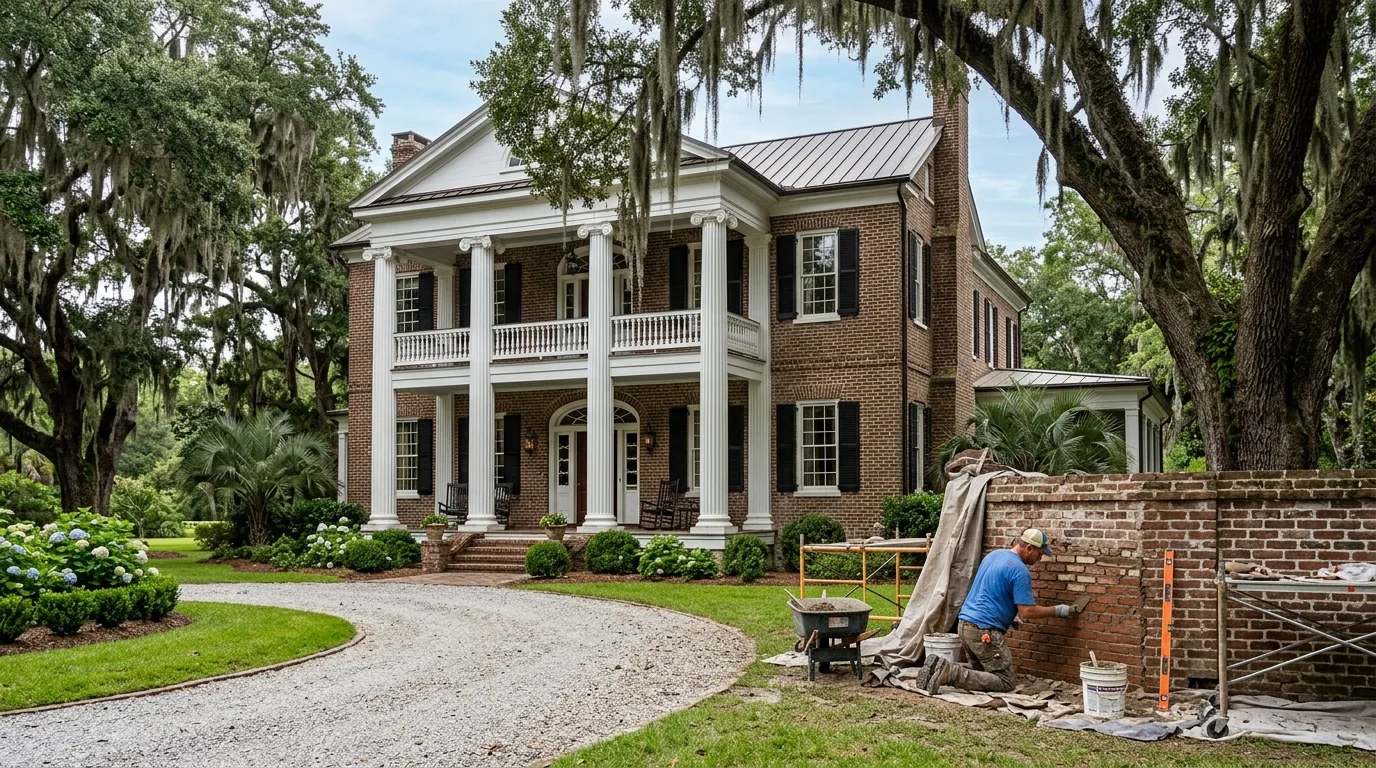
The homes in Converse Heights and Hampton Heights are among Spartanburg’s most architecturally significant residential properties — tree-lined streets, original craftsman millwork, and a sense of permanence that newer construction rarely matches. They’re also among the most challenging to restore after water damage. Water damage in historic homes in Spartanburg requires a restoration team that understands not just how to extract water and dry a structure, but how to handle plaster walls, original hardwood, cast iron drain lines, and the specific vulnerabilities of construction methods from the 1920s through the 1960s.
In this post, we cover what makes historic Spartanburg home restoration different, the specific water damage risks that older homes face, and what homeowners in the Converse Heights and Hampton Heights neighborhoods should know before a loss occurs.
Water Damage in a Historic Spartanburg Home?
We have specific experience with Converse Heights and Hampton Heights properties. Call (888) 376-0955 for an immediate assessment.
Why Historic Homes in Spartanburg Face Higher Water Damage Risk
Spartanburg’s historic neighborhoods — particularly the Hampton Heights Historic District, listed on the National Register of Historic Places, and the Converse Heights neighborhood with homes averaging $250,000+ — contain housing stock that is 60 to 100+ years old. Original construction from that era was built to different standards, with different materials, and without modern moisture management practices.
The specific risk factors that make historic homes more vulnerable to water damage in Spartanburg include:
Aging plumbing systems: Original galvanized steel supply pipes from the 1940s and 1950s corrode from the inside out over decades. The first external sign is often reduced flow, discolored water, or minor leaks at joints. When a section of heavily corroded galvanized pipe finally fails, it can fail catastrophically. Cast iron drain lines from the same era develop cracks at joints and accumulate scale that restricts flow and eventually creates backups.
Original crawl space construction: Pre-war and immediate post-war crawl space construction in Spartanburg typically used brick or stone pier foundations with no vapor barrier and vented foundation walls — a design that works poorly in the region’s humid subtropical climate and is directly exposed to the hydrostatic pressure from Spartanburg’s Piedmont red clay soil.
Deferred maintenance patterns: Historic homes that have changed hands multiple times over decades sometimes carry deferred maintenance that the current owner didn’t create and may not be fully aware of — a cracked flashing detail that’s been slowly introducing water to the attic for years, a downspout that no longer discharges properly, or a sump that no longer works.
What Makes Historic Home Water Damage Restoration Different
Plaster walls: The most significant difference in restoration protocol. Modern drywall is typically removed when fully saturated — the material is inexpensive and the labor to dry it in place exceeds the replacement cost. Original plaster in a historic home is architecturally significant and irreplaceable in its original form. Plaster also has a much higher water content capacity than drywall — it can absorb significant moisture without failing the way drywall paper does. However, plaster dries far more slowly and requires lower-temperature, more gradual drying protocols to prevent cracking.
Original hardwood floors: Quarter-sawn oak flooring original to Converse Heights and Hampton Heights homes has real value that modern engineered flooring cannot replace. Water damage to original hardwood can sometimes be addressed with careful drying and refinishing rather than replacement — but this requires moisture readings that confirm drying is complete and a refinishing professional who understands historic wood behavior.
Lime mortar and brick foundations: Lime mortar — used in brick foundation construction before Portland cement became standard — can be damaged by prolonged water exposure in ways that require specialized masonry repair rather than standard concrete patching.
Lead paint considerations: Pre-1978 homes in Spartanburg’s historic districts may have lead paint on original windows, trim, and walls. Any restoration that disturbs painted surfaces in these homes requires EPA RRP (Renovation, Repair, and Painting) protocol compliance — a regulatory requirement that adds time and cost but is legally required for pre-1978 residential structures.
How to Respond to Water Damage in a Historic Spartanburg Home
The most important difference between responding to water damage in a historic home versus a modern home is the risk of aggressive drying damaging irreplaceable materials. High-temperature, high-velocity drying protocols appropriate for modern drywall construction can crack plaster and split original hardwood. A restoration team working in a Converse Heights or Hampton Heights home needs to know:
Plaster drying protocol: Slower air movement at moderate temperatures, with careful monitoring of ambient humidity to prevent aggressive drying cycles that crack plaster. Plaster may take 2–3 times longer to reach moisture baseline than equivalent drywall would.
Salvage assessment before removal: Original trim, flooring, and millwork should always be assessed for salvage potential before removal is considered. In many cases, original materials that appear damaged can be restored to their pre-loss condition with appropriate drying and professional restoration.
Contractor coordination: In the Hampton Heights Historic District, certain exterior changes may require City of Spartanburg Historic Preservation Office review. Any reconstruction involving changes to exterior elements visible from the street should be coordinated with the preservation office to ensure compliance.
Historic Home Water Damage — Spartanburg Specialists
We understand Converse Heights and Hampton Heights restoration requirements. Call (888) 376-0955 for a free assessment.
Common Water Damage Scenarios in Historic Spartanburg Neighborhoods
Roof and attic water intrusion: Historic homes with original slate, tile, or early asphalt shingles frequently develop slow leaks at flashings — the metal transition pieces around chimneys, dormers, and valleys. These leaks often go undetected for extended periods because the attic insulation absorbs moisture before it becomes visible below. By the time ceiling staining appears in a Converse Heights home, the attic may have sustained significant wood rot and mold growth.
Basement and crawl space flooding: The original brick and stone foundation systems in Hampton Heights homes were not designed for waterproofing in the modern sense. As Spartanburg’s clay soil moves seasonally and original mortar deteriorates, these foundations develop pathways for groundwater intrusion that require careful remediation.
Pipe failures in finished spaces: In historic homes that have had plumbing updates in the last 30–50 years, copper-to-galvanized transition fittings are common failure points. These transitions corrode at the joint where dissimilar metals contact, and they frequently fail inside finished wall spaces that require significant demolition to access.
Frequently Asked Questions
How is water damage restoration different in Converse Heights homes?
Converse Heights homes often have original plaster walls, hardwood floors, and crawl space construction that require slower drying protocols and more careful material assessment than modern construction. The presence of original materials that are architecturally significant means that “remove and replace” is not always the right answer — salvage assessment is essential before removal. We have specific experience with historic Spartanburg properties and apply appropriate protocols.
Does water damage restoration affect historic preservation status in Spartanburg?
Interior restoration work generally does not affect historic preservation status. Exterior changes visible from the street may require coordination with the City of Spartanburg’s Historic Preservation Office, particularly in the Hampton Heights Historic District. We advise on preservation requirements during the assessment phase when they apply to a project.
What does water damage restoration cost in historic Spartanburg neighborhoods?
Projects in Converse Heights and Hampton Heights typically run 20–40% higher than equivalent modern home projects due to slower drying protocols for plaster, salvage assessment work, and the higher complexity of original construction details. The baseline water damage restoration cost in Spartanburg is $2,188–$2,249 — historic projects with significant original material typically exceed this baseline. Full cost detail is at our water damage restoration cost guide for Spartanburg.
Historic District Water Damage Restoration in Spartanburg
Converse Heights, Hampton Heights, and older Spartanburg homes — we know how to restore them right. Call (888) 376-0955.
Related resources: