Mold Growth After Water Damage: Spartanburg's Humidity Factor
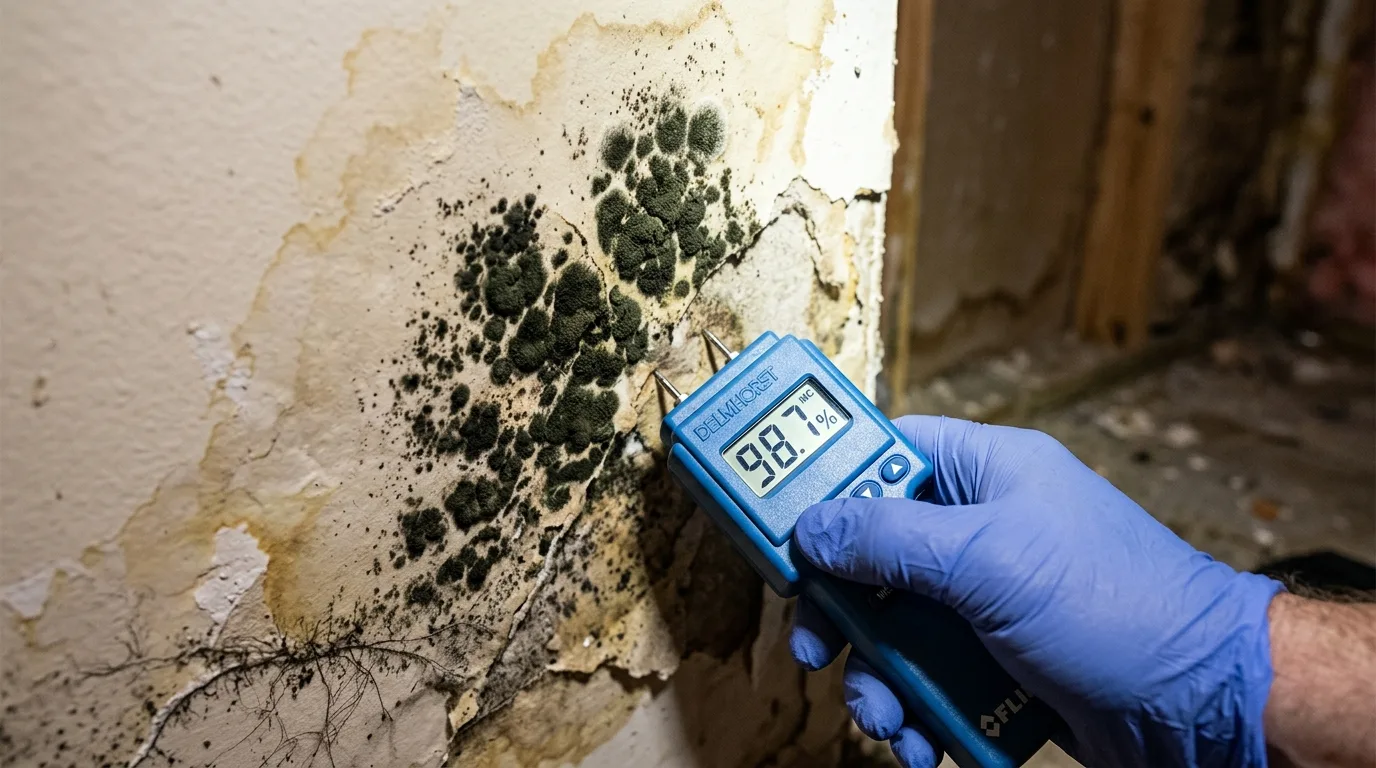
Most homeowners understand that water damage and mold are connected — but fewer understand just how compressed that timeline is in Spartanburg. Mold growth after water damage in Spartanburg homes can begin within 24–48 hours of a water event during summer months, which is meaningfully faster than in drier climates. The difference isn’t dramatic by the numbers, but in practical terms, it means that “I’ll deal with this after the weekend” is a decision that can turn a straightforward water extraction into a mold remediation project.
In this post, we explain the science behind Spartanburg’s accelerated mold risk, what signs indicate mold has established after a water event, and why professional response within the first 24 hours produces dramatically better outcomes for homeowners throughout Spartanburg County.
Water Damage and Mold Concern in Spartanburg?
24/7 emergency response — 60-minute arrival. Don't let water sit overnight. Call (888) 376-0955 now.
Why Spartanburg’s Summer Humidity Accelerates Mold Growth
Mold requires three conditions to grow: a food source (organic material like drywall paper, wood, or fabric), a temperature above approximately 40°F, and moisture. In most climates, moisture is the limiting factor — once a water event is addressed, materials begin drying and the mold risk decreases. In Spartanburg’s summer climate, with outdoor humidity consistently above 70% from May through September, the ambient air itself maintains elevated moisture levels on wet materials even after the visible water is gone.
In a drier region, a wet section of drywall might begin to air-dry within hours of water extraction — the low ambient humidity pulls moisture away from the surface. In Spartanburg’s summer air at 75% relative humidity, that same drywall cannot lose moisture to the surrounding air because the air is nearly as saturated as the material. The moisture stays in place, and mold colonization proceeds.
This dynamic is why professional structural drying equipment is not a convenience in Spartanburg — it is the only mechanism capable of creating the vapor pressure differential needed to pull moisture from wet materials when the ambient air is already saturated. Running air movers and dehumidifiers creates a low-humidity microenvironment around the affected materials that overcomes the ambient humidity barrier.
The 24-48 Hour Window in Spartanburg
In Spartanburg’s summer conditions, the transition from “wet materials” to “active mold growth” happens on a 24–48 hour timeline. Here is what that progression typically looks like:
Hours 0–6: Water extraction and initial stabilization. If professional equipment is deployed immediately, materials begin drying and mold risk is minimal. This is the ideal window for intervention.
Hours 6–24: If extraction is delayed or incomplete, water continues migrating into wall cavities and subfloor. Surface temperatures on wet materials remain near the dewpoint, creating optimal conditions for spore germination. Visible mold is not yet present, but colonization has often begun below the surface.
Hours 24–48: Active mold growth becomes visible on cellulose-based materials — drywall paper, cardboard, fabric. At this point, water damage restoration has been joined by mold remediation as a parallel project, adding both cost and project duration.
Beyond 48 hours: Established mold colonies, visible surface growth, and elevated airborne spore counts. The scope of remediation increases significantly with each additional day.
Properties in Spartanburg’s Grain District lofts and throughout the Wadsworth Hills neighborhood face this timeline acutely during summer months, when outdoor temperatures and humidity create a sustained mold-favorable environment around any moisture source.
Signs Mold Has Established After Water Damage
Visible discoloration: Black, gray, or green spots on drywall, ceiling tiles, wood trim, or flooring that appear after a water event. Mold on painted surfaces often appears as fuzzy or blotchy growth.
Musty odor after drying: If the musty odor in an affected area persists after apparent drying is complete, active mold growth is likely continuing inside wall cavities or behind materials. Mold produces volatile organic compounds (VOCs) as metabolic byproducts — the musty smell is the odor of mold metabolizing organic material.
Black staining on drywall paper or wood: Dark staining on the face paper of drywall or on wood surfaces that are not the dark color of the original material often indicates mold growth, particularly when associated with water exposure.
Allergic symptoms that improve when leaving the affected area: Unexplained respiratory irritation, congestion, or headaches that correlate with time in a specific room or area of the home may indicate elevated airborne mold spore counts.
Confirmation via testing: Air sampling and surface sampling by a qualified inspector provides objective confirmation of mold presence and species identification, which is useful for insurance documentation and remediation scoping.
Worried About Mold After Water Damage in Spartanburg?
We provide IICRC-certified mold assessment and remediation for Spartanburg County homeowners. Call (888) 376-0955.
Types of Materials Most Vulnerable to Mold After Water Damage
Drywall: The paper face of standard drywall is a highly efficient mold substrate — it’s cellulose, which is mold’s preferred food source. Drywall that has been wet for more than 24–48 hours in Spartanburg’s summer conditions is generally considered non-salvageable if not properly dried by that point.
Wood (studs, joists, subfloor): Structural wood is more resistant to mold initiation than drywall paper but will support mold growth if maintained at elevated moisture content. IICRC standards use moisture meter readings in wood as the primary metric for determining when drying is complete.
Insulation: Fiberglass batt insulation is not itself a mold food source, but it holds water and creates sustained moisture contact with adjacent structural wood. Wet fiberglass batt insulation is typically removed rather than dried in place.
Carpet and padding: Carpet padding holds moisture extremely efficiently and is one of the fastest materials to develop mold after a water event. Standard practice is to remove and replace wet carpet padding in any loss where water contact has occurred.
How to Prevent Mold After Water Damage in Spartanburg
Call immediately: In Spartanburg’s summer conditions, every hour counts. Emergency extraction initiated within the first 6 hours of a loss produces dramatically better mold outcomes than extraction initiated 24 hours later.
Do not close up the space: Closing doors and windows in a wet space traps humid air and slows any natural drying that might otherwise occur. Keep interior doors open and run any available fans to increase air circulation while waiting for professional help.
Do not use a household dehumidifier to manage a flood: Household dehumidifiers are designed for relative humidity in the 50–60% range, not for pulling moisture from saturated structural materials. A water damage event requires commercial drying equipment with significantly higher capacity.
Remove wet materials immediately: Wet carpet padding, insulation, and non-structural materials can be removed before professional help arrives to reduce the mold substrate load in the space.
Frequently Asked Questions
How fast does mold grow after water damage in Spartanburg?
In Spartanburg’s summer humidity above 70%, mold colonization on wet materials can begin within 24 to 48 hours of a water event. Visible surface mold may appear within 48–72 hours under these conditions. This timeline is compressed compared to drier climates — professional extraction and drying within the first 24 hours is the most effective mold prevention strategy available.
Can water damage cause mold in walls without visible signs?
Yes — mold frequently establishes inside wall cavities behind apparently dry surfaces. Water that migrates into a wall cavity during a loss event creates an enclosed, high-humidity environment ideal for mold growth, even if the visible surface appears to have dried. Thermal imaging and moisture meter readings are necessary to detect hidden moisture and the mold risk it creates. See our mold remediation service page for information on how we assess hidden mold.
Does homeowners insurance cover mold from water damage?
Coverage for mold from water damage depends on your specific policy and whether the underlying water event was covered. Most South Carolina policies that cover the original water event will cover mold remediation directly resulting from that event, up to the policy’s mold sub-limit. Policies vary widely on mold coverage — confirm your mold coverage before a loss occurs. Our guide on homeowners insurance and water damage in South Carolina covers this in detail.
Fast Mold Prevention Starts With Fast Response — Spartanburg
IICRC-certified water extraction and mold remediation for Spartanburg County. Call (888) 376-0955 immediately after water damage.
Related resources: