The 8-Step Water Damage Restoration Process Explained
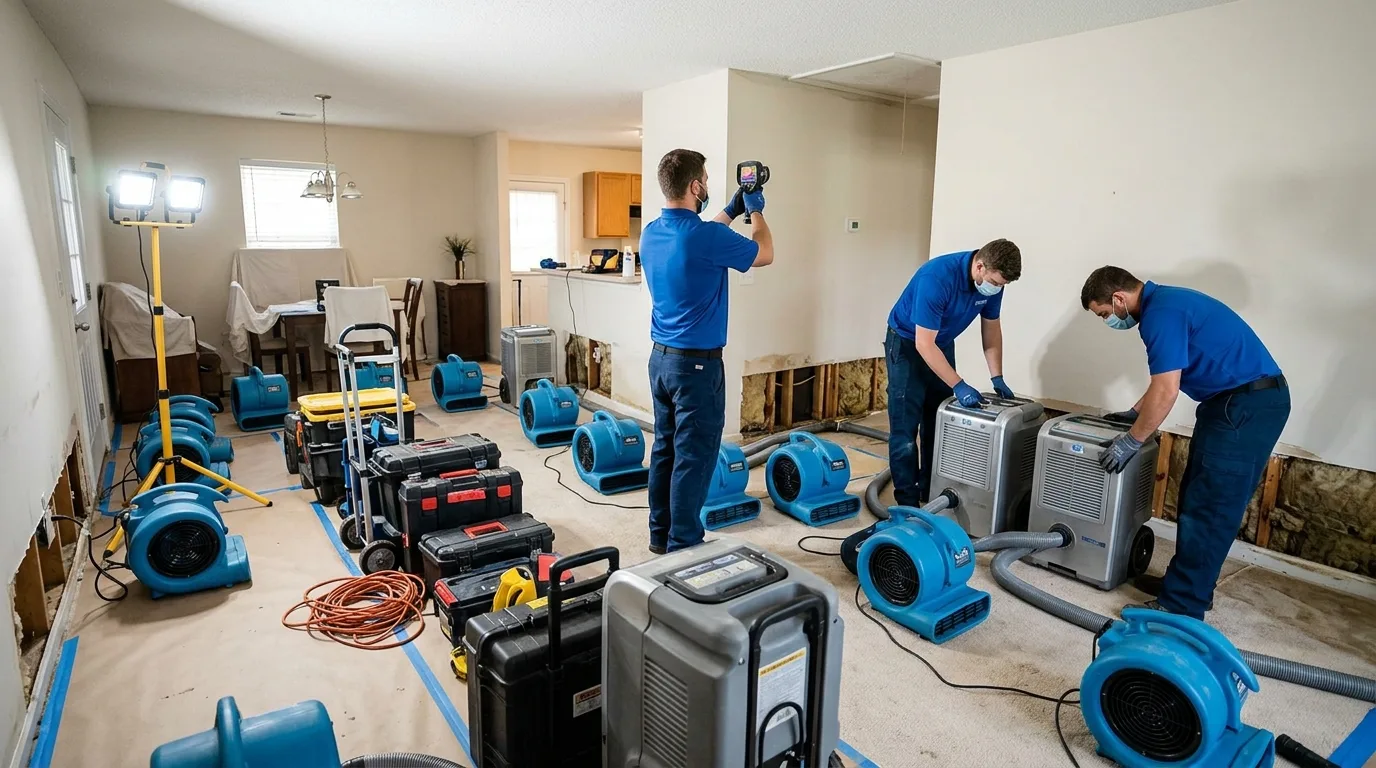
When water floods a room in your Spartanburg home, the restoration process that follows can feel opaque — contractors arrive, equipment appears, materials get removed, and eventually the space looks normal again. But what’s actually happening between the first phone call and the final walkthrough? Understanding the water damage restoration process helps homeowners make better decisions, communicate more effectively with their insurer, and recognize when a contractor is skipping critical steps.
In this post, we walk through the complete 8-step water damage restoration process used by IICRC-certified teams in Spartanburg SC, explaining what happens at each stage and why each step matters for the outcome.
Professional Water Damage Restoration in Spartanburg
IICRC-certified team, 60-minute response, full 8-step restoration process. Call (888) 376-0955 24/7.
Why the Process Matters in Spartanburg’s Climate
The water damage restoration process is not guesswork — it follows the IICRC S500 Standard for Professional Water Damage Restoration, a document developed from decades of industry research on how water migrates into building materials, how different materials respond to drying, and what conditions must be met before reconstruction can safely begin.
In Spartanburg’s humid subtropical climate, cutting corners at any stage carries consequences. The region’s summer humidity above 70% means incomplete drying creates mold risk within 24–48 hours. The Piedmont red clay soil means moisture sources often continue contributing to the loss even after the visible water is gone. A restoration process that skips the moisture mapping stage or ends drying too early will produce a project that looks complete but isn’t — and the mold or structural damage that results typically shows up 3–6 months later when it’s far more expensive to address.
Step 1: Emergency Contact and Dispatch
The process begins the moment you call. Our Spartanburg emergency line — (888) 376-0955 — is answered 24/7. During the call, we gather information about the source of the water, the affected area, and whether safety hazards (electrical panels in the water, structural instability) are present. We aim to dispatch a team within minutes, targeting a 60-minute arrival time anywhere in Spartanburg County.
What happens before we arrive: shut off the water source if possible and shut off electrical power to any room with standing water. Do not enter a space with standing water that may have electrical contact. Photograph the loss before any cleanup begins.
Step 2: Inspection and Damage Assessment
On arrival, the first task is a systematic assessment of the full scope of the loss. This includes visual inspection of all affected rooms and adjacent spaces, thermal imaging with infrared cameras to map hidden moisture inside walls and under flooring, and moisture meter readings on all structural materials in and around the affected area.
This inspection step is where many DIY and under-equipped restoration attempts fail. Water doesn’t stay where it’s visible — it migrates along joists, wicks through wall cavities, and collects in spaces that show no surface wetness. In Spartanburg homes with crawl spaces, water frequently migrates from an upper-level loss down through the floor assembly and into the crawl space without being visible from below. Thermal imaging catches this hidden migration.
The assessment produces the scope of loss documentation that drives both the restoration plan and the insurance claim. Everything found in this step is photographed and logged.
Step 3: Water Extraction
Extraction removes all standing water and extractable moisture from surfaces and materials. Truck-mounted extraction units, which generate significantly more vacuum force than portable equipment, are used for large standing water volumes. Portable extraction units handle confined spaces, closets, and crawl spaces. Wet carpet and padding are extracted and then typically removed — carpet padding is almost never salvageable from a water event.
Speed matters in Spartanburg specifically because of the 24–48 hour mold colonization window under summer humidity conditions. Every hour of extraction delay allows water to migrate further and provides additional time for mold to establish on wet materials. Our extraction protocol begins within minutes of arrival, not after a lengthy assessment phase.
Step 4: Damaged Material Removal
Materials that cannot be dried in place and are not worth the effort to do so are removed at this stage. This includes wet carpet padding, Category 2 or Category 3 affected flooring, unsalvageable drywall, and wet insulation. In Spartanburg County, historic homes in the Converse Heights and Hampton Heights neighborhoods sometimes have original plaster walls that can be dried in place — a different protocol than modern drywall, which must be removed when fully saturated.
Material removal is documented completely — every item removed is logged and photographed for insurance purposes. The extent of removal is determined by moisture readings and material category, not by visual assessment alone.
Water Damage Restoration in Spartanburg — Full 8-Step Process
We handle everything from emergency extraction to final reconstruction. Call (888) 376-0955.
Step 5: Cleaning and Sanitization
Water events involving Category 2 (gray water) or Category 3 (black water) contamination require antimicrobial treatment of all affected surfaces before drying begins. EPA-registered biocidal agents are applied to structural surfaces — concrete, subfloor, framing — and air scrubbers with HEPA filtration run to capture and remove airborne particulates.
Even Category 1 clean water losses in Spartanburg receive a sanitization step when mold is detected or when drying has been delayed — if mold colonization has begun, the antimicrobial step is part of the mold remediation protocol that runs parallel to the water damage restoration.
Step 6: Structural Drying
The structural drying phase is where Spartanburg’s climate makes the most difference in project duration. Industrial air movers create high-velocity airflow across wet surfaces, accelerating evaporation. Commercial dehumidifiers capture the moisture-laden air and exhaust dry air back into the space, maintaining a low-humidity microenvironment that pulls moisture from structural materials.
In Spartanburg’s summer conditions, the ambient outdoor air has a relative humidity above 70% — running air movers alone without dehumidification simply introduces humid outside air that cannot carry additional moisture away from the wet materials. The dehumidifier is what creates the vapor pressure differential needed for effective structural drying in this climate.
Drying takes 3–7 days for most residential losses, with daily moisture readings at all documented measurement points. We do not close out this phase based on time elapsed or visual appearance — only when calibrated moisture meter readings confirm all materials have returned to pre-loss baseline levels.
Step 7: Monitoring and Documentation
Throughout the drying phase, a technician visits daily to record moisture readings, adjust equipment placement as needed, and document progress. This daily monitoring record is one of the most important documents in the restoration project — it proves to the insurer that drying was conducted properly and provides the baseline data for clearing the project as complete.
In Spartanburg County, where summer ambient conditions make drying more challenging than the baseline assumptions in national insurance reporting tools, the daily monitoring record is sometimes essential for supporting insurance claims that insurers question based on project duration.
Step 8: Reconstruction
After drying is confirmed complete, reconstruction begins: replacing removed drywall, reinstalling insulation, refinishing floors, painting, and completing any other restoration to pre-loss condition. We coordinate reconstruction through licensed SC contractors and provide complete documentation of the reconstruction scope to the insurer.
The reconstruction phase is not technically part of the IICRC S500 restoration standard, but it is part of a complete restoration project. Homeowners who receive a drying-complete sign-off from a restoration company and then need to find separate contractors for reconstruction often experience delays and coordination problems. We manage the full project from extraction through final walkthrough.
Frequently Asked Questions
How long does the water damage restoration process take in Spartanburg?
The extraction and structural drying phase takes 3–7 days for most residential projects in Spartanburg. Reconstruction adds 1–3 weeks depending on scope. Total project duration from emergency call to final walkthrough is typically 2–4 weeks for a standard residential loss.
What does IICRC-certified mean for water damage restoration?
IICRC certification means the technician has completed training and testing in the Institute of Inspection, Cleaning and Restoration Certification’s S500 standard — the industry benchmark for water damage restoration. Certified technicians follow documented protocols rather than relying on visual assessment alone, which produces more consistent results and better insurance documentation. See our water damage restoration service page for more on what our certification means for your project.
What happens if my water damage goes untreated for days in Spartanburg?
In Spartanburg’s summer humidity, a water loss left untreated for 24–48 hours will typically develop active mold growth on wet materials. After 48–72 hours, mold is well-established and remediation becomes a parallel project to water restoration, significantly increasing both scope and cost. Our guide on mold growth after water damage in Spartanburg explains the timeline in detail.
Start Your Restoration — Call Spartanburg Water Damage Now
Full 8-step restoration process, IICRC-certified, insurance documentation from day one. Call (888) 376-0955.
Related resources: