Seasonal Home Maintenance Checklist for Spartanburg Homeowners
Spartanburg’s seasonal maintenance requirements are different from most of the country — a checklist designed for the Midwest or the Pacific Northwest misses the climate-specific tasks that matter most for homes in Upstate South Carolina. Nearly 50 inches of annual rainfall, summer humidity above 70%, and Piedmont red clay soils that drain slowly create a specific pattern of seasonal risks that Spartanburg homeowners can predict and prevent with regular maintenance.
This checklist covers the key water damage prevention tasks organized by season for Spartanburg homes. In this post, we cover why each task matters for Spartanburg specifically, when to do it, and what to look for.
Water Damage Prevention Starts with Inspection
Free crawl space and water damage assessments for Spartanburg homeowners. Call (888) 376-0955.
Why Spartanburg’s Climate Creates Distinct Seasonal Risks
Each season in Spartanburg presents a specific water damage risk category:
Winter (December–February): Freeze-thaw cycles affecting pipes in crawl spaces and exterior walls. Spartanburg’s Upstate SC location produces freeze events that coastal South Carolina avoids — uninsulated crawl space pipes and exterior wall plumbing are the primary failure points.
Spring (February–May): Peak flooding and water intrusion season. Spartanburg County records the majority of its flood events during this period, when persistent rainfall saturates the red clay soil and thunderstorms produce rapid surface runoff. Spring is also when frozen pipes from winter finally thaw and reveal their failures.
Summer (June–September): Mold risk peaks due to humidity above 70%. HVAC condensate line failures peak as systems run continuously. Any water damage left unaddressed accelerates toward mold during this period.
Fall (October–November): Preparation for winter. Crawl space inspection before freeze season, gutter and drainage maintenance after leaf fall, and HVAC service before heating season.
Winter Maintenance (December–February)
Inspect and insulate crawl space pipes. Before the first freeze forecast, inspect all pipes running through your crawl space. Foam pipe insulation wraps quickly and provides meaningful protection for the most exposed sections. For pipes near foundation vents or in the coldest zones of the crawl space, consider heated tape beneath the insulation.
Seal foundation vents during freeze events. During forecast cold snaps, covering or sealing foundation vents with foam vent covers slows the temperature drop inside the crawl space and extends the effective protection of any pipe insulation.
Know your main water shutoff. Every winter, before the first cold forecast, confirm that every household member knows where the main water shutoff is and how to operate it. A fast shutoff is the difference between a small pipe burst claim and a catastrophic one.
Inspect the roof before storm season. Loose flashing, missing or cracked shingles, and deteriorated ridge caps are winter entry points for water. A visual inspection from the ground and binoculars can identify major problems; a professional roof inspection every 3–5 years catches problems early.
Monitor crawl space moisture. If your crawl space has a dehumidifier, confirm it’s operational and draining properly before winter rains begin. An inoperative dehumidifier during peak spring rain season creates ideal mold conditions.
Spring Maintenance (March–May)
Inspect downspouts and drainage. After spring leaf and debris accumulation, confirm all gutters are clear and downspouts discharge water at least 6 feet from the foundation. In Spartanburg’s clay soil, water that ponds near the foundation has nowhere to drain quickly — it generates the hydrostatic pressure that causes foundation seepage and crawl space moisture.
Check window wells and basement entries. Low-lying window wells and below-grade doors are common entry points during spring flooding events. Ensure window well drains are clear and function properly; confirm door thresholds are in good condition.
Schedule sewer lateral inspection. Spring is the highest-risk season for sewer backup events in older Spartanburg neighborhoods. A camera inspection of the sewer lateral every 10–15 years catches developing root intrusion and joint failures before they produce a backup event. Older neighborhoods like Converse Heights should prioritize this inspection.
Walk the property after major rain events. After significant spring storms, walk the perimeter of your home looking for areas where water ponds near the foundation. Standing water within 10 feet of the foundation after 30+ minutes is a drainage problem that needs correction before soil saturation creates hydrostatic pressure.
Spring Water Damage Inspection in Spartanburg
We provide free crawl space inspections and water damage assessments throughout Spartanburg County. Call (888) 376-0955.
Summer Maintenance (June–September)
Service HVAC condensate lines monthly. Flush condensate drain lines with a 1:1 bleach/water solution monthly during peak cooling season (June–August). Algae growth in condensate lines peaks when lines run continuously, and a blocked line can produce ceiling water damage from a condensate pan overflow within hours. This is Spartanburg’s most common hidden-leak cause during summer months.
Inspect crawl space for moisture in July. Mid-summer is when Spartanburg’s crawl space moisture problems are most severe — peak humidity combined with maximum soil moisture produces the highest crawl space relative humidity readings of the year. If you haven’t had your crawl space professionally assessed, July is when the problem is most visible.
Check water heater for leaks and corrosion. Water heaters in Spartanburg reach the end of their useful life more quickly than the national average due to the mineral content of Upstate SC water. Inspect the base of your water heater for rust staining, corrosion at fittings, and mineral scale buildup. A water heater that shows significant exterior corrosion should be replaced proactively — a catastrophic failure produces a significant water damage event.
Look for efflorescence on foundation walls. White, chalky deposits on concrete or masonry foundation walls (efflorescence) indicate that water is moving through the wall and depositing minerals on the surface. This is an early indicator of water intrusion that, if addressed early, can be corrected before it produces significant interior damage.
Fall Maintenance (October–November)
Service HVAC before heating season. Fall HVAC service should include inspection of the condensate system, supply and return air connections, and ductwork in crawl spaces. Disconnected ductwork in the crawl space is a common source of unconditioned air infiltration that elevates crawl space humidity during fall transition weather.
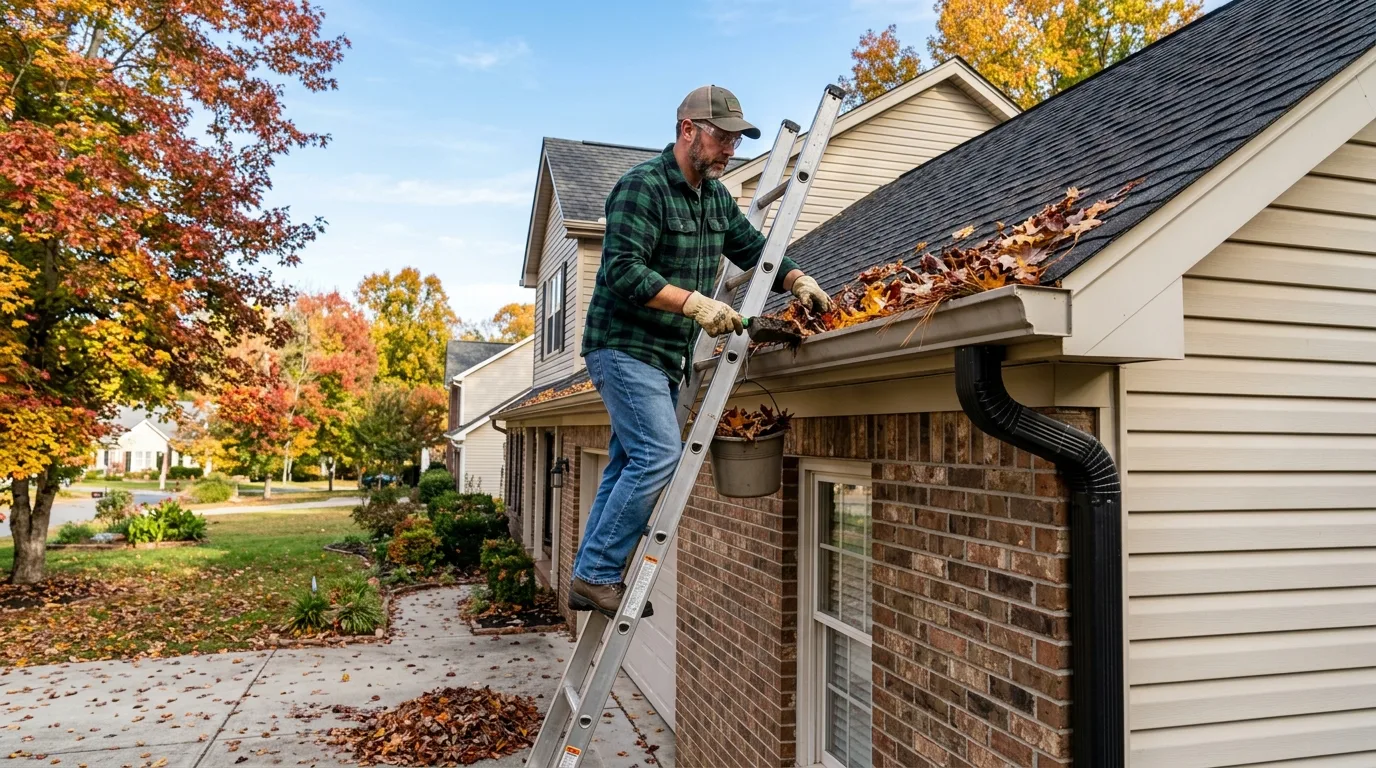
Clear gutters after leaf fall. In Spartanburg’s tree-filled neighborhoods like Fernwood and Converse Heights, heavy leaf drop in October–November can choke gutters within days. Clear gutters after the majority of leaves have fallen — blocked gutters in winter produce ice damming, foundation water, and potential roof damage from standing water.
Winterize outdoor plumbing. Disconnect and drain outdoor hoses, shut off and drain irrigation systems, and insulate or shut off hose bibs before the first frost forecast.
Schedule crawl space inspection. Fall is the ideal time to assess crawl space condition before winter — before soil moisture peaks with spring rains and before the first freeze creates pipe vulnerability. A fall inspection that identifies a compromised vapor barrier, elevated moisture, or beginning mold growth can be addressed through winter, with encapsulation or remediation complete before peak spring risk.
Frequently Asked Questions
What is the most important seasonal maintenance task for Spartanburg homeowners?
Annual crawl space inspection is the highest-impact maintenance task for most Spartanburg County homeowners, particularly those in pre-1990 crawl space homes. The combination of red clay soil moisture pressure and Spartanburg’s humid climate makes crawl space problems the most common preventable source of structural water damage in this market.
How often should I have my Spartanburg home inspected for water damage risk?
Annual inspection of the crawl space and major mechanical systems (HVAC, water heater, plumbing visible areas) catches developing problems before they produce losses. Properties with known risk factors — historic neighborhoods, previous flood damage, uninspected crawl spaces — benefit from twice-annual inspection.
What is the water damage risk in Spartanburg during fall and winter?
Fall is a lower-risk period for most water damage events compared to spring and summer, but it is the critical preparation window for winter freeze risk. The maintenance steps taken in October–November directly determine how vulnerable a home is during Spartanburg’s winter freeze events. See our guide on preventing frozen pipes in Spartanburg for the specific winter preparation steps.
Year-Round Water Damage Protection in Spartanburg
Spartanburg Water Damage Restoration provides inspections, emergency response, and full restoration. Call (888) 376-0955.
Related resources: