Sewage Backup Cleanup: What Spartanburg Homeowners Need to Know
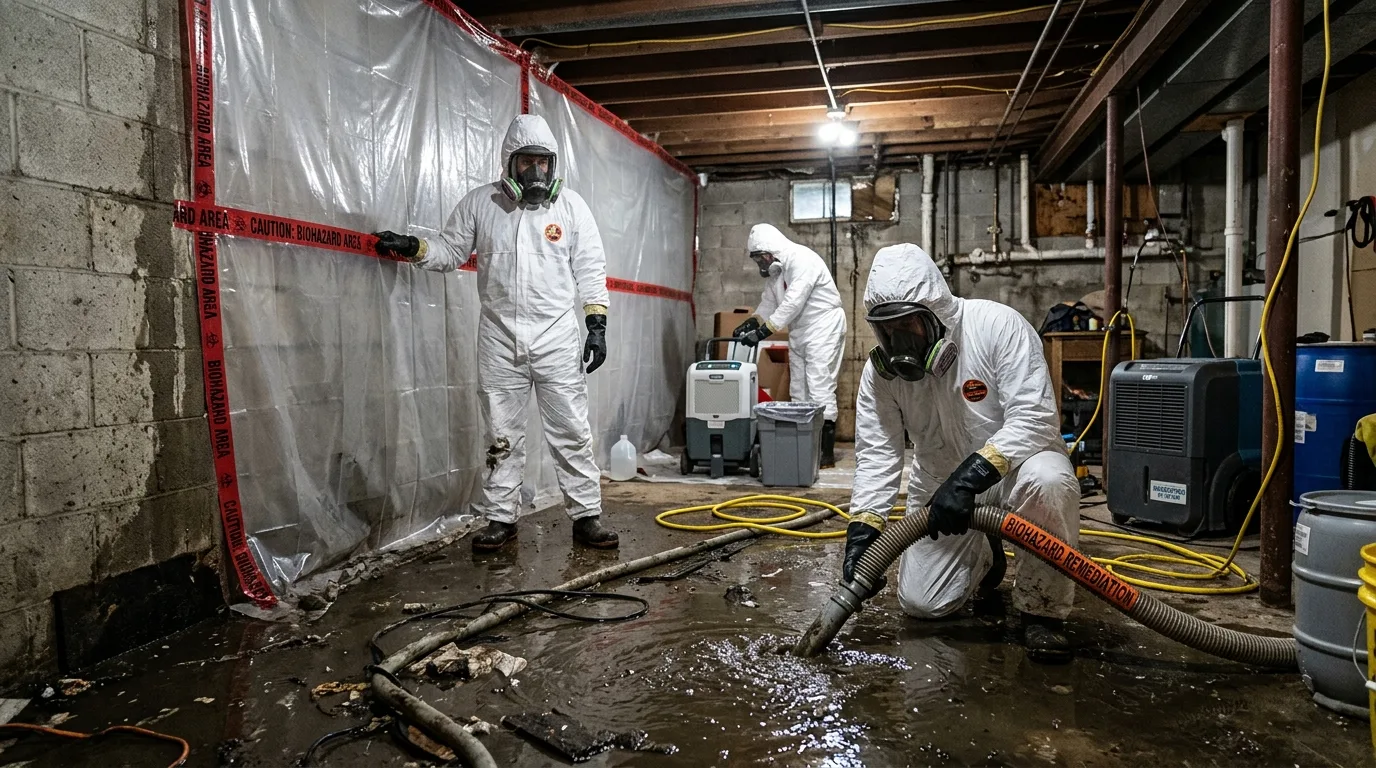
When sewage backs up into a Spartanburg home, the instinct is to grab a mop and start cleaning. That response is understandable — and also exactly wrong. Sewage backup is classified as Category 3 black water under IICRC water damage standards, meaning it contains pathogens, bacteria, and viruses that create genuine health risks for anyone who contacts it without proper personal protective equipment. Sewage cleanup in Spartanburg requires professional biohazard response — not because restoration companies want the business, but because the cleanup process genuinely requires equipment and protective gear that homeowners don’t have.
In this post, we explain what Category 3 cleanup actually involves, why Spartanburg’s aging sewer infrastructure makes sewage backup a recurring problem in certain neighborhoods, what insurance covers, and how to prevent future backups.
Sewage Backup in Your Spartanburg Home?
Do NOT attempt cleanup without protective gear — call immediately for safe professional response. (888) 376-0955.
What Category 3 Black Water Means
Water damage is classified into three categories based on contamination level:
Category 1 — Clean water: Originates from a supply line or clean fixture. Safe to contact without protective equipment.
Category 2 — Gray water: Appliance discharge, washing machine overflow, or water with minor contamination. Requires care but not full biohazard protocols.
Category 3 — Black water: Contains sewage, flood water that has contacted soil, or water with high pathogen levels. Includes sewage backup from any source, toilet overflow involving sewage, flood water that has entered from outside. Requires full biohazard protocols — gloves, respiratory protection, Tyvek suits — for anyone in contact with the affected area.
Sewage backup is always Category 3, regardless of appearance. Even water that looks relatively clear may have backed up through a contaminated drain line. The visual assessment is not reliable for determining contamination — treat all sewage backup events as Category 3.
Why Spartanburg Faces Elevated Sewage Backup Risk
Spartanburg’s older neighborhoods — Converse Heights, Hampton Heights, and the surrounding areas developed before 1960 — contain original sewer laterals that are approaching or exceeding their design life. Clay pipe sewer laterals installed in the 1940s and 1950s crack under root intrusion, settle out of alignment, and develop joint failures that restrict flow and allow root infiltration. When Spartanburg’s spring storm season saturates the red clay soil, the expanded clay exerts lateral pressure on already-compromised pipe sections, accelerating failure.
The result is a pattern where certain older Spartanburg County neighborhoods experience sewage backups at much higher rates during spring storm events than the regional average. The municipal sewer system handles normal wastewater volume adequately, but peak spring storm inflow — from foundation drains and other storm connections that were common in older construction — overloads the system and forces sewage back through the lowest available connection, typically floor drains in lower levels.
Homes in areas near Croft State Park and along older street networks throughout Spartanburg County should have their sewer lateral inspected by camera every 10–15 years to identify developing problems before they produce backup events.
What Professional Sewage Cleanup Involves
Professional Category 3 sewage cleanup follows a specific protocol that protects both the homeowner and the technicians:
Personal protective equipment: All personnel entering the affected area wear full PPE — gloves, eye protection, respiratory protection (N95 minimum), and disposable coveralls. This is not optional for Category 3 work.
Sewage extraction: Specialized extraction equipment removes contaminated water. The extracted material is disposed of in accordance with South Carolina biohazard disposal regulations — not down a drain.
Complete material removal: All porous materials in contact with the sewage — carpet, carpet padding, drywall, insulation — are removed and disposed of. Unlike Category 1 events where some materials can be dried in place, Category 3 protocol requires removing all porous materials because they cannot be decontaminated to safe levels.
Biocidal treatment: All exposed structural surfaces — concrete slab, subfloor, framing — are treated with EPA-registered biocidal agents that kill pathogens. Multiple applications may be required.
Air scrubbing: HEPA-filtered air scrubbers run throughout the project to capture airborne particulates and pathogens.
Structural drying: After sanitization is complete, structural drying follows the same protocol as clean water events — air movers and dehumidifiers until all moisture readings return to baseline. In Spartanburg’s summer humidity, this phase is particularly important: residual moisture after sewage cleanup creates conditions for secondary mold growth.
Documentation: Complete documentation of extraction, material removal, and sanitization is generated for insurance claim purposes.
Safe Professional Sewage Cleanup in Spartanburg
Category 3 biohazard protocols, complete documentation, insurance coordination. Call (888) 376-0955.
What Insurance Covers for Sewage Backup in Spartanburg
Standard homeowners insurance in South Carolina does not automatically cover sewage backup. Coverage requires a specific sewage backup endorsement, which is an add-on that must be purchased when the policy is written or renewed. Many homeowners are unaware of this gap until they file a claim.
What the sewage backup endorsement typically covers: the cost of cleanup, material removal, and restoration. What it may not cover: the cost of pipe repair itself, or backup events that result from the homeowner’s failure to maintain the system.
If you are unsure whether your policy includes sewage backup coverage, call your agent before the spring storm season to confirm and add the endorsement if needed. We document sewage backup losses completely regardless of coverage status — the documentation we generate is useful for any coverage you do have, and for establishing the loss record for future coverage discussions.
How to Prevent Sewage Backup in Spartanburg Homes
Sewer lateral camera inspection: A licensed plumber can inspect your sewer lateral with a camera for approximately $100–$300. This identifies root intrusion, joint failures, or settling that predicts backup risk before an event occurs.
Backflow preventer installation: A check valve installed in the sewer line prevents municipal sewer system backflow from entering the home during peak flow events. This is one of the most effective and cost-efficient backup prevention measures for Spartanburg homes in older neighborhoods.
Avoid FOG (fats, oils, grease): Kitchen grease is a major contributor to sewer line blockages — disposed of down the drain, it accumulates on pipe walls and restricts flow.
Don’t flush wipes: Even products labeled “flushable” wipe products accumulate in sewer lines and cause blockages. Use the garbage for anything other than human waste and toilet paper.
Frequently Asked Questions
Is sewage backup dangerous to clean up yourself?
Yes — Category 3 sewage contains bacteria, viruses, and other pathogens that can cause serious illness. Without full personal protective equipment (gloves, respiratory protection, eye protection, disposable coveralls), direct contact with sewage backup creates health risks that are not worth taking. Call a professional immediately and keep household members and pets out of the affected area.
Does homeowners insurance cover sewage backup in Spartanburg?
Standard homeowners insurance typically does not cover sewage backup — it requires a specific endorsement. Many Spartanburg homeowners discover this gap when filing a claim. If you don’t have the endorsement, the loss may be paid out-of-pocket. See our guide on water damage insurance in South Carolina for more on coverage gaps.
How much does sewage cleanup cost in Spartanburg without insurance?
Sewage cleanup in Spartanburg typically costs $3,000–$7,000 for extraction, sanitization, and material removal, depending on the affected area. If the sewage backup endorsement is not in place, this cost falls to the homeowner. Our sewage cleanup service page has a full cost breakdown.
Spartanburg Sewage Backup Response — Call Immediately
Do not attempt DIY cleanup. Call Spartanburg Water Damage Restoration at (888) 376-0955 for safe professional biohazard response.
Related resources: